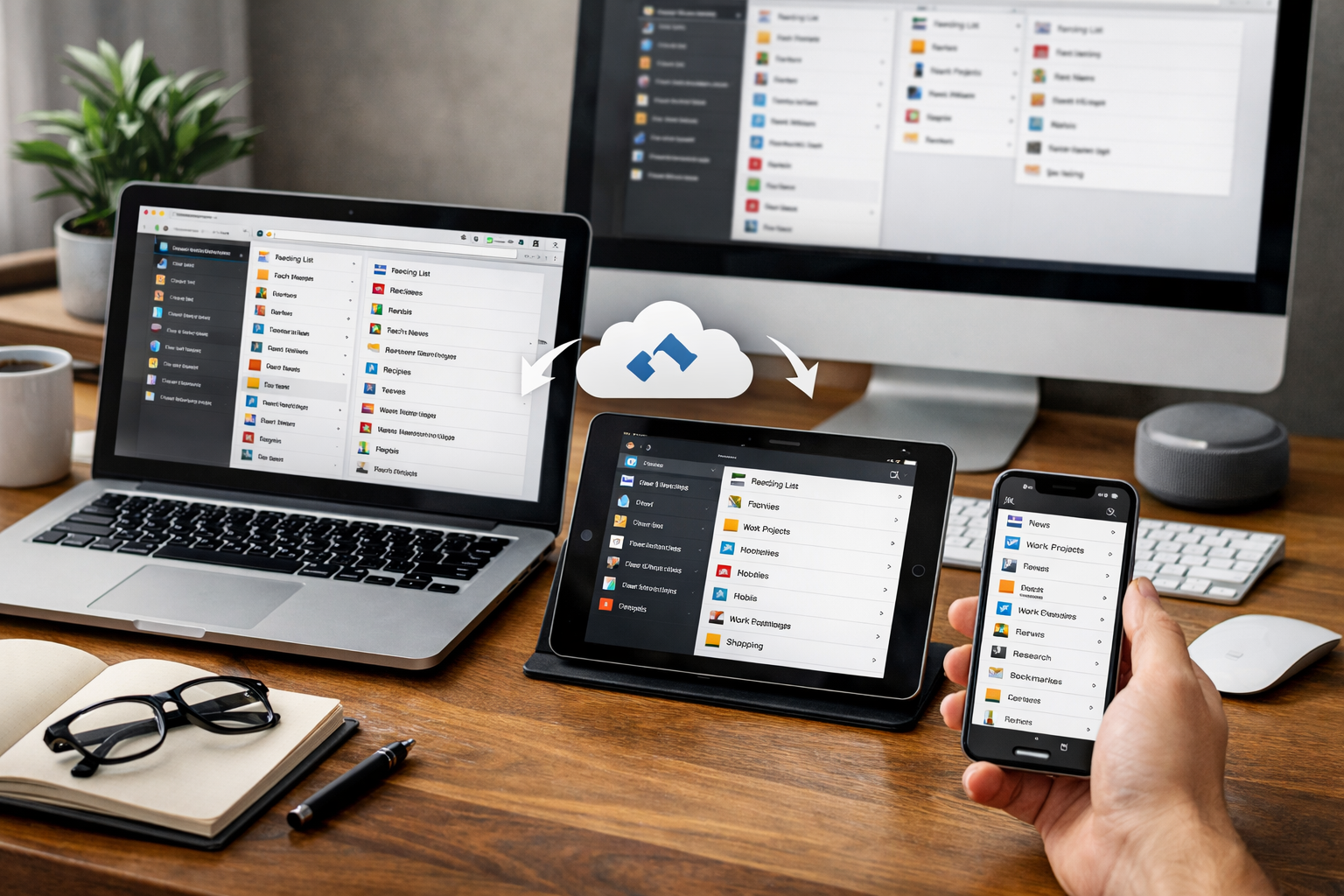
Finding useful websites and content takes time, which is why many internet users bookmark discovered content. However, with the many searches, the bookmarks may become overwhelming to manage. That is even more challenging when you are using multiple devices such as a desktop, a laptop, a tablet, and a smartphone.
One of the major problems encountered in the process is creating duplicate bookmarks, outdated links and difficulty in locating saved resources faster than expected. Attempts to edit and save them afresh may also result in having inconsistent bookmark libraries on your devices. Hence, having a well-organised bookmark system will help you find resources faster and become more productive.
This article will enlighten you on some of the easy and practical ways to arrange your bookmarks and make them accessible across your devices.
Using Browser Sync Features
When developers realised the challenges internet users face in sorting pages, modern browsers now automatically synchronise bookmarks. When you sync bookmarks on a user account, they will be reflected on all devices. You also get to have them automatically backed up and enjoy a seamless transition between devices.
Some of the widely used browsers with syncing options include Google Chrome, Mozilla Firefox, Microsoft Edge and others. However, as you do this, consider the security of your content and account to ensure it’s not exposed.
Using a Logical Folder Structure
Folders that can be accessed from a central location have been used for many years to store shared content. These logical folders still remain one of the most effective organisational tools. One could create a folder for each bookmark category for easy search and access. Depending on your search interests, you may have as many main folders as you want for Research, Shopping, Travel, Learning, and more. Within the major folder, you can create subfolders for better organization. To avoid confusion and clutter, use fewer folder nesting.
Collecting Addresses in One Place
While syncing and logical folder creation have worked for many, there remains a growing challenge in managing links, sites, and resource directories. In order to overcome these, having an online and centralized collection management platform will ensure easier discovery, Better categorization and faster access to information. People use this regularly updated directory of trending sites to find curated address collections, links and site collections for information they need in a single location. The site organization platforms eliminate the problem of checking multiple search results every now and then to find an address. Worst still is finding that the address of a frequently used site has changed. Using an address collection platform reduces these inconveniences and provides users with a more efficient browsing environment. Some of these platforms are also free to use.
Use Bookmark Tags and Labels
Folders may work when you have a central server, but using tags and labels lets you apply multiple classifications to one bookmark. This method is recommended over the use of folders and it’s the best way to organize digital links. Thus, rather than relying only on difficult-to-arrange folder hierarchies. The use of tags and labels also allows you to place multiple keywords that can identify or lead you to a single item. That allows faster searching than with folders. Some of the tags you can use include urgent, read later, tools, etc
Regularly Organising the Bookmark Library
Over time, storing too many bookmarks can clutter your browser and reduce your productivity. There are old files on that you may not be using and need to be deleted. Having a monthly or quarterly cleanup and organization exercise is advisable. Remove broken links and delete duplicated bookmarks, as well as the outdated resources. There are easy-to-use tools that you can use to identify duplicate or dead links.
Cross-Device Bookmarking Workflow
A cross-device bookmarking workflow helps you organise links across devices by saving and syncing them for easy access. This technique makes use of cloud-connected browser sync and other external bookmarking managers. This helps maintain a single, organised list of your favourite reads. The recommended workflow is usually to save to mobile first, then organize the list on the desktop. One should regularly synchronise and review the list.
Conclusion
Organising your bookmarks helps you locate important resources quickly and become more productive. One of the best practices when using browser tags, labels, and folders is to synchronize them weekly. Also, have bookmark management habits to keep your cross-device accounts safe. While using cloud storage and backup is an easy option, using an address collection platform is even more convinient, makes information easy to access, and automatically cleans outdated links.